IVBH- Redefining the HealthCare We Have Known
“Based on industry norms, what would have taken seven years and would have cost between $100 million to $700 million in R&D, the team of IVBH finished in three years with a capital investment of less than $5 million. This has stunned the world. This has unlocked previously unknown deep scientific and technical insights for lung cancer, NAFLD, and breast cancer, bringing the field exponentially closer to positively impacting the lives of over 200 million Americans and over 1 billion people worldwide”
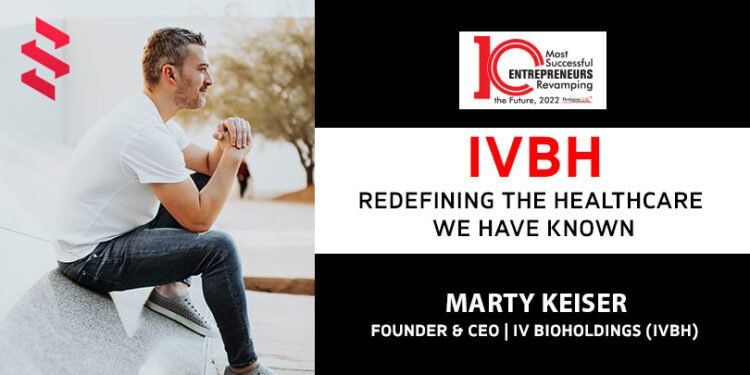
The civilization wherein we reside is forever evolving, and the world in which the current generation lives is no longer the same. We claim that the world is changing, but what is causing this shift? It’s important to consider what’s causing this shift. Because the world is a ‘living structure,’ it is always developing. Great leaders emerge from time to time and bring about tremendous improvements in people’s lives. The act of seeing develops concepts. When these concepts are put into action, they result in transformation, which is regarded as a sign of development. If done correctly, such life observations unleash technological revolutions.
“Imagination is the highest form of research,” Albert Einstein famously stated. And in one short sentence, he encapsulated the concept that to bring about changes, we must look beyond our immediate surroundings to potential answers.
This article brings forward an inspirational story of how ‘Marty Keiser’ started IV BioHoldings (IVBH), a bio innovation studio that conceives, creates, and develops first-in-category bio-platform companies that radically improve the detection, diagnosis, and treatment of disease.
Certain expectations and understandings that have been formed over decades, a style of thinking that is taught and generally accepted throughout business school, medical school, and corporate training departments, are the enemy of development, believes Marty. Through execution and outcomes, he intends to question and reframe those understandings, as well as set a new baseline of expectations from which the world can continue to develop and progress. Marty Keiser, the founder, and CEO of IVBH steers,
“I want to demonstrate that developing and commercializing a novel medicine or diagnostic test does not have to take 10 years and cost a billion dollars. I want to establish that finding fewer than 10% of lung tumours in stages I is not the best we can accomplish. I will prove that we don’t need to cram people into skyscrapers to get the job done. I will show that when properly taught, individuals can and will take action to avoid disease using the correct techniques. I work to convey that profit and purpose are not mutually exclusive.”
IVBH is Distinguished By Its Life-Saving Techniques
IVBH is defined by speed, efficiency and risk management, advanced data science, exponential technologies, powerful partnerships, and over 60 years of multi-disciplinary expertise. LiquidLung, HepGene, and Mammogen are the three firms that have come out of the studio so far. Across the portfolio you will find three flagship liquid biopsy programs comprising non-invasive, clinical-stage diagnostics for lung cancer, non-alcoholic fatty liver disease (NAFLD), and breast cancer.
The technologies of IVBH are distinguished by three factors. First is their focus on RNA, providing the real-time telemetry of the body’s biological response to the presence or absence of disease and allowing for consistent and accurate detection across all stages. Second is the comprehensive nature of their scientific and technical platforms, allowing them to answer important unmet clinical questions across the entire care continuum of disease, from early detection to confirmatory diagnosis to earlier and more precise treatment decisions. Third, is their strategic decision to commercialize their technologies as PCR tests, an affordable, reliable, and portable solution with rapid turnaround times that is easily accessible in most labs, especially now.
According to Marty, IVBH is now directing the transformation. “We will continue to rethink, innovate, reinvent, and remake what we have reinvented as long as IVBH exists. Our current focus is on dismantling healthcare silos, developing more efficient business models and procedures, and figuring out how to combine data, technology, and people to deliver the most effective, economical, and accessible precision health solutions to patients in need.”
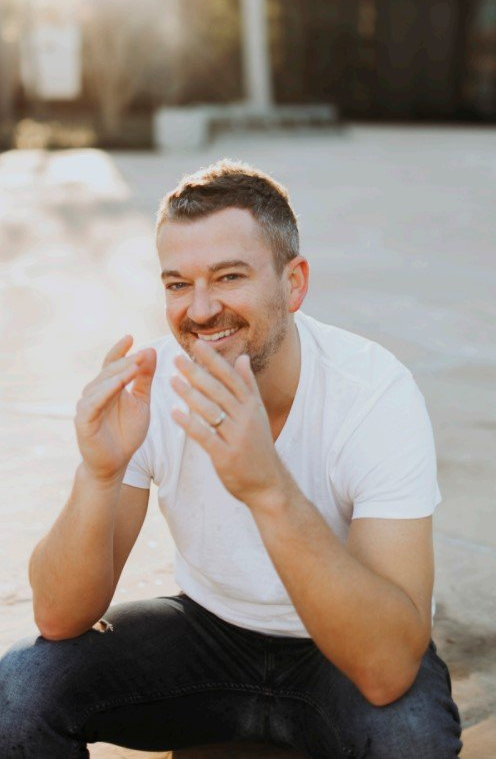
Viewing Challenges From The Lens Of Opportunities
The majority of diagnostics firms do not produce therapies, and the majority of therapeutic firms do not develop diagnostics. The two have been viewed as wholly different entities for a long time, with no contact or collaboration. One of the many beneficial outcomes of COVID was a renewed understanding of the critical role diagnostics plays in the treatment chain.
“Simply said, you can’t properly address an issue if you can’t accurately diagnose it. As these traditional barriers fall, and we begin to collect and integrate data from better-informed and more engaged patients, I see a century’s worth of precision health opportunities, from disease prevention to earlier detection to targeted treatments that are far more tolerable and effective than current treatment standards.”
Meet Marty Keiser
Marty joined the field of entrepreneurship in the same way that most people do: with personal frustration, a vision of a better solution, and an “if not me, then who” and “if not now, then when” calling. For him, the personal frustration was with the time, expense, and risk involved in practically every area of healthcare, as well as with the diagnostics and therapeutics communities’ acceptance of 7-10-year development schedules, billion-dollar R&D expenditures, and 80-90 percent failure rates. There had to be a better way, he always thought.
“ From 2016-2018 I entered one of the most creative periods of my life, pinpointing all of the traditional elements of success and approaching them in non-traditional ways, reimagining business models, inverting processes, breaking down silos, performing deep diligence on various data sources and technologies and establishing powerful partnerships that I would need in order to be successful. I picked up the baton of entrepreneurship with great excitement in 2018, confident in my plan and driven by a strong desire to make a positive difference for mankind.”
After years of experience, Marty thinks that the most important mental exercise for entrepreneurs is being able to find harmony between the short- and long-term. He believes that one must be laser-focused on the short-term in order to execute important tasks that move the idea or the business forward, while at the same time never losing sight of the longer-term goal. He cites an anecdote,
“ Growing up travelling in and out of New York City I learned that there is a trick to successfully navigating its crowded and chaotic sidewalks without tripping over people. I learned that in order to avoid physical contact with those approaching you, you must keep your focus in the distance. In this process, you may miss an opportunity to bump into an old friend, but you may end up making a new connection, or even meet the love of your life. The point being, know where you’re going and keep an eye towards the destination, the long-term goal, but don’t be afraid to take some short-term risks, to change course, or to take a different route on the way there. I learned the importance of this very early in my entrepreneurial journey and worked hard to find that harmony every single day.”

Will Payer-Dependent Diagnostics Companies Get Left Behind? Marty Keiser, Founder at IVBH / Mammogen